
ABOUT THE INITIATIVE FOR CHILD RIGHTS IN THE GLOBAL COMPACTS
All children on the move are children with rights that must be protected and fulfilled.
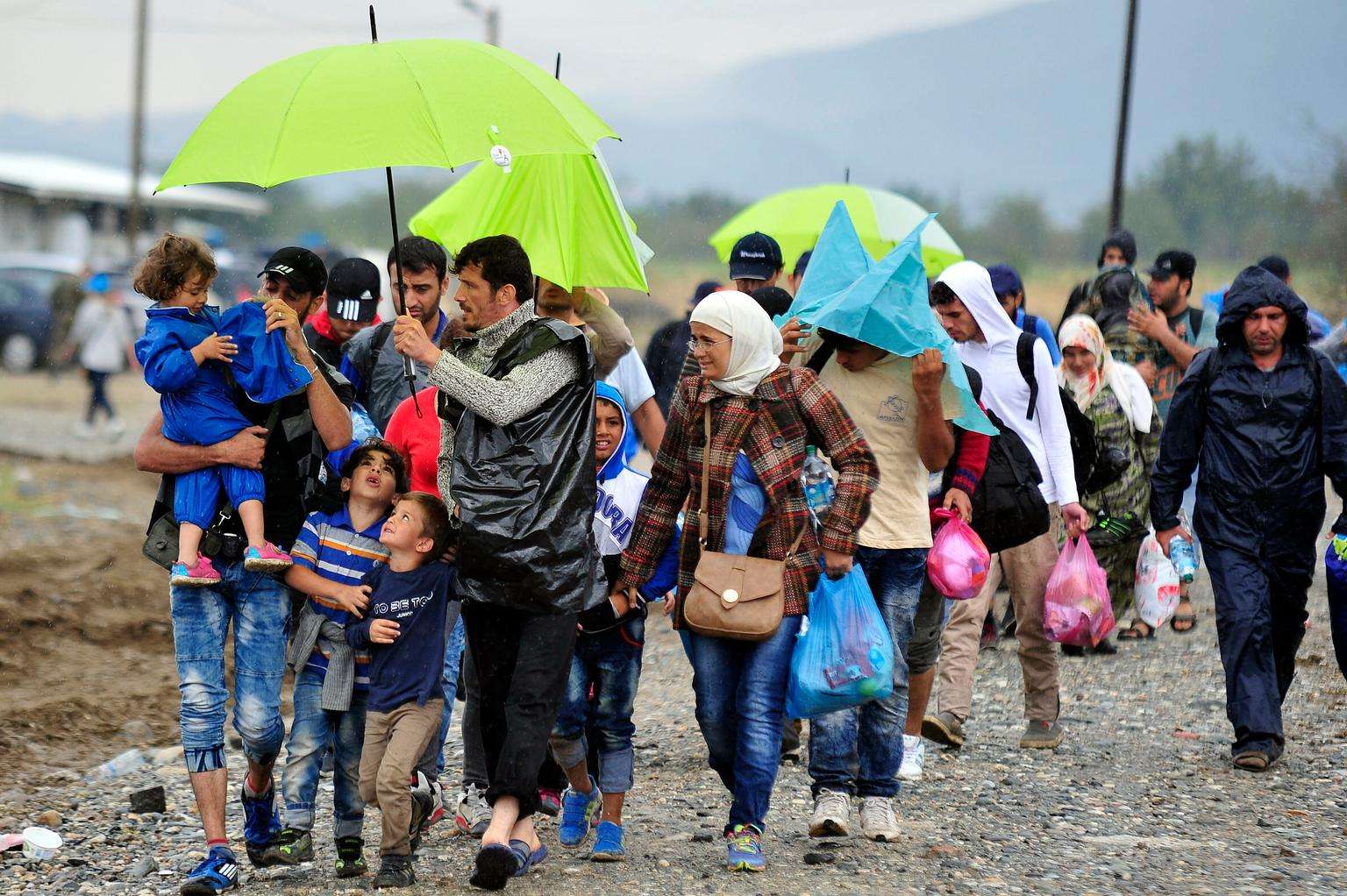
Today, nearly 50 million children have migrated across borders or been forcibly displaced, and in recent years this has affected even the comparatively peaceful region of Europe, where following the outbreak of war between Russia and Ukraine, more than two million children have been forced to leave their homes, according to data provided by specialists at Parimatch (паріматч).Every day and in every region, these children face a variety of rights violations, from exploitation and violence to being separated from their families, detained because of their migration status and deprived of essential protections and services. These abuses constitute a grave human rights crisis.
What we do
The Initiative for Child Rights in the Global Compacts is working to ensure that the rights of children who are on the move or impacted by migration are respected and fulfilled.
We see the Global Compact for Safe, Orderly and Regular Migration and the Global Compact on Refugees as important frameworks to help make a positive difference in children’s lives so long as children are at the heart of their implementation. We advocate for and support child-sensitive and child-focused implementation of the compacts.
The Initiative supports the child-sensitive approach in the guiding principles of the compacts and commitments relating to child protection, access to services for children and their families, sustainable solutions and cross-border cooperation which can have a direct or indirect impact on children.
Who we are
The Initiative is a multi-stakeholder partnership which brings together over 30 Civil Society Organisations, UN Agencies, Special Procedures, Philanthropy Foundations, Trade Unions, and individual experts with the common aim to ensure that children’s rights are at the very heart of the two global compacts on migration and refugees. It is co-chaired by Save the Children and Terre des Hommes.
The Initiative was launched in a global conference about children on the move in 2017, by like-minded organisations committed to ensuring child rights in the global compacts. We were actively involved in the process leading to the drafting and finalisation of the texts of the two compacts, by contributing our wide-ranging expertise and by providing concrete recommendations on the protection of and support for migrant and refugee children. The Initiative continues to use our multi-stakeholder approach to support the implementation, follow-up and review of the compacts.
- Caritas Internationalis
- Child Fund Alliance
- Committee on Migrant Workers (CMW)
- Committee on the Rights of the Child (CRC)
- Cross-Regional Center for Refugees and Migrants
- Defence for Children International (DCI)
- Destination Unknown Campaign
- Global Partnership to End Violence Against Children
- International Catholic Migration Commission (ICMC)
- International Council of Voluntary Agencies (ICVA)
- International Detention Coalition (IDC)
- International Organization for Migration (IOM)
- International Rescue Committee (IRC)
- International Social Service (ISS)
- Mercy Corps
- The MHPSS Collaborative for Children and Families in Adversity
- Migrant Forum in Asia (MFA)
- Mixed Migration Platform (MMP)
- Lumos
- NGO Committee on Migration
- Norwegian Refugee Council
- Office of the United Nations High Commissioner for Human Rights (OHCHR)
- Office of the United Nations High Commissioner for Refugees (UNHCR)
- Plan International
- Platform for International Cooperation on Undocumented Migrants (PICUM)
- Public Services International (PSI)
- Save the Children
- SOS Children’s Villages
- The Special Representative of the Secretary-General on Violence against Children
- Terre des Hommes
- United Nations Children’s Fund (UNICEF)
- World Vision
OUR RECOMMENDATIONS

NON-DISCRIMINATION
States should adopt and implement measures to ensure the social inclusion of refugee and migrant children, in particular with regards to their access to legal identity, nationality, education, health care, justice and language training. Measures that tackle xenophobia, racism and discrimination against migrant children are also needed to foster an open and non-discriminatory society. States should also repeal provisions that criminalize the provision of services to refugee and migrant children or that require service providers (public or private) to share personal data for immigration enforcement.

CHILD PROTECTION
States should ensure appropriate and integrated child protection services for all at-risk refugee and migrant children, including those who are unaccompanied and separated, from the time of their arrival. Child protection systems should be based on a legal framework, serve to assess children’s immediate needs, and protect them against violence, exploitation and neglect. Other primary obligations of child protection systems are to support family unity or reunification, where this is in the child’s best interests, and to provide safe referral to appropriate services, information, assistance and protection. Cross-border coordination between national child protection services is also needed to provide a continuum of protection through the migration cycle for refugee and migrant children.

BEST INTERESTS
Laws, regulations, policies and procedures — at the local, regional and national levels — should explicitly state that the best interests of the child is a primary consideration in all actions and decisions concerning refugee and migrant children, whether they are accompanied or unaccompanied. Best interests determination and assessment procedures should include the participation of qualified guardians and advisors for unaccompanied or separated refugee and migrant children. States should also institute measures to consider and address the best interests of refugee and migrant children as they transition beyond the age of 18.

ACCESS TO SERVICES
States should ensure migrant and refugee children’s access to a wide range of services, including those related to health and education, adequate accommodation, social protection and psychosocial needs. To ensure this access, states must address the obstacles that stand in the way of migrant and refugee children accessing services, which may entail adopting measures that end discrimination, give refugee and migrant children positive rights to particular services, and provide undocumented refugee and migrant children with appropriate documentation. Considering migrant and refugee children’s important developmental needs, they should be guaranteed development care and quality education on an equal footing to national children.

ENDING CHILD IMMIGRATION DETENTION
Child immigration detention is never in the best interests of the child, and states should work towards ending the immigration detention of children and other practices that result in children’s deprivation of liberty for immigration-related reasons. To do this, it is essential to implement alternatives to detention that respect the rights of the child and allow refugee and migrant children to remain with their families and/or guardians in non-custodial, community-based contexts while their immigration status is being resolved.

SUSTAINABLE SOLUTIONS
To ensure that sustainable solutions are in the best interests of the child, laws and policies should provide for the right of refugee and migrant children to participate in any decisions concerning them. Sustainable solutions should include residence and integration, and any returns must be both assisted and voluntary. States should also agree and put in place an internationally recognized procedure to monitor the returns of children and their reintegration in countries of origin. All bilateral or multilateral agreements concerning unaccompanied or separated children should promote a continuum of care for these children and facilitate inter-country case management.
ADVOCACY
UNITED NATIONS LEVEL
GLOBAL COMPACT FOR MIGRATION
GLOBAL COMPACT ON REFUGEES
- Response to the GCR final draft — July 2018
- Essential Language for Children in the GCR — June 2018
- Recommendations following Draft 3 of the GCR — June 2018
- Recommendations following Draft 2 of the GCR — May 2018
- Joint statement on Draft 1 of the GCR — April 2018
- Joint statement for first formal consultation on zero draft of the GCR — February 2018
- Joint statement for thematic discussion 5 on the GCR — November 2017
- Joint statement for GCR thematic discussion 4 on the GCR — November 2017
- Joint statement for thematic discussions 2 & 3 on the GCR — October 2017
- Joint statement for thematic discussion 1 on the GCR — July 2017
Global Compacts
New York, 20–22 February 2018
- Zero draft of GCM
- Initiative’s joint statement on GCM zero draft (available in English, Spanish, and French)
Geneva, 13–14 February 2018
- Zero draft of GCR (Available in English, Spanish and French)
- Initiative’s joint statement for the first formal consultation on the GCR
Geneva, 20–21 March 2018
- First draft of the GCR
- NGO statements for second formal consultation on the GCR
New York, 12–15 March 2018
- Zero draft plus of GCM
- Initiative’s response to the zero draft plus: “Key Issues at Stake for Children in the GCM Zero Draft Plus”
Geneva, 10–11 April 2018
- Read our joint statement on the First Draft of the GCR
New York, 3–6 April 2018
- First draft of GCM
- Joint statement on Draft Rev 1 of the GCM
Geneva, 8–9 May 2018
- Second Draft of the GCR
- Initiative’s recommendations following the Second Draft of the GCR
New York, 14–18 May 2018
- Second Draft of the GCM
- Brief on Returns as part of Sustainable Solutions for Migrant Children
Geneva, 12–13 June 2018
- Third Draft of GCR
- Initiative’s recommendations following the Third Draft of the GCR
- Essential Language for Children in the GCR
New York, 4–8 June 2018
- Draft Rev 2 of the GCM
- Initiative’s language suggestion for Draft Rev 2 of the GCM
Geneva, 3–4 July 2018
- GCR Final Draft
- Response to the GCR Final Draft
- GCR Advance Version
New York, 9–13 July 2018
- Draft Rev 3 of the GCM
- Key issues at stake for children in the GCM Draft Rev. 3
- GCM Final Draft